Thermal Pad vs Thermal Paste: Which TIM Is Better for AI Servers?
As AI computing continues to evolve, AI servers are becoming more powerful and thermally demanding. High-performance GPUs, CPUs, AI accelerators, HBM, and power components generate significant heat during continuous operation.
Effective AI server thermal management is essential for maintaining system performance, stability, and long-term reliability. One of the key decisions in thermal design is choosing the right Thermal Interface Material (TIM), especially between thermal pads and thermal paste.
So, when it comes to thermal pad vs thermal paste, which TIM is better for AI servers?
The answer depends on the interface gap, thermal requirements, mechanical structure, electrical insulation needs, and assembly process.

Thermal Pad vs Thermal Paste: What Is the Difference?
Both thermal pads and thermal paste improve heat transfer between heat-generating components and cooling structures such as heatsinks or cold plates. However, they differ in form, application method, and typical use cases.
What Is a Thermal Pad?
A thermal pad is a pre-formed solid TIM with a defined thickness. It is placed between electronic components and cooling structures to fill air gaps and improve thermal transfer.
Thermal pads are available in different thicknesses, thermal conductivity levels, hardnesses, and electrical properties. They are commonly used around GPUs, CPUs, memory components, VRMs, power ICs, and other heat-generating devices.
Key advantages include:
- Controlled thickness
- Reliable gap filling
- Easy handling and installation
- No dispensing equipment required
- Electrically insulating options
- Good mechanical compliance
- Consistent manufacturing performance
What Is Thermal Paste?
Thermal paste, also known as thermal grease, is a flowable TIM applied between two surfaces. It fills microscopic surface irregularities and reduces air gaps between components and cooling structures.
Thermal paste can provide excellent thermal performance when the interface is thin and the dispensing process is well controlled. However, performance can depend on application volume, bond-line thickness, surface condition, assembly pressure, and long-term material stability.
Thermal Pad vs Thermal Paste for AI Servers
There is no single TIM that is ideal for every AI server application. The selection should be based on the actual interface requirements.
| Requirement |
Thermal Pad |
Thermal Paste |
| Gap filling |
Excellent |
Suitable for small gaps |
| Thickness control |
Excellent |
Application dependent |
| Installation |
Simple |
Requires dispensing |
| Surface conformity |
Good |
Excellent |
| Electrical insulation |
Available |
Depends on formulation |
| Manufacturing consistency |
High |
Process dependent |
| Mechanical compliance |
Good |
Formulation dependent |
For interfaces with a defined or relatively large gap, thermal pads provide controlled thickness and reliable gap filling. For very thin interfaces between closely matched surfaces, thermal paste can conform closely to microscopic surface irregularities.
Why AI Server Thermal Management Is Challenging
AI computing platforms continue to increase computing density and power consumption. Modern AI servers may contain multiple high-performance GPUs or AI accelerators operating under heavy workloads.
The thermal path can be simplified as:
AI Accelerator / GPU → TIM → Heatsink or Cold Plate → Cooling System
Even when the cooling system has sufficient capacity, poor contact between the component and cooling structure can increase thermal resistance.
Therefore, TIM selection should not be based only on nominal thermal conductivity. Engineers should also evaluate:
- Thermal resistance
- Interface gap
- TIM thickness
- Compression
- Surface flatness
- Electrical insulation
- Mechanical stress
- Thermal cycling
- Long-term reliability
- Manufacturing requirements
Thermal Pads for GPU and AI Accelerator Applications
GPUs and AI accelerators are among the most thermally demanding components in modern computing systems.
A thermal pad for GPU and AI server applications can be particularly useful when the cooling structure must accommodate a defined interface gap or component height tolerance.
Depending on the system design, thermal pads may be used around:
- GPU and AI accelerator packages
- HBM and memory components
- VRMs and MOSFETs
- Power ICs and voltage regulators
- Network processors
- High-speed communication components
For these applications, engineers need to balance thermal conductivity with softness, compression, thickness, and electrical insulation.
A higher thermal conductivity value does not automatically mean better system performance if the TIM cannot properly fill the interface or accommodate mechanical tolerances.
Thermal Pads for CPU and High-Power Components
High-performance server CPUs can also generate substantial heat. The TIM between the CPU package and cooling structure must minimize thermal resistance while maintaining reliable contact during long-term operation.
Depending on the interface geometry, thermal pad, thermal paste, or another specialized TIM may be considered.
The correct choice should be based on the actual interface gap, mechanical structure, and thermal design rather than thermal conductivity alone.
How to Choose the Right TIM for AI Server Thermal Management
When selecting a TIM for an AI server, several factors should be evaluated.
1. Thermal Conductivity and Thermal Resistance
Thermal conductivity indicates the material's ability to transfer heat, but it does not determine overall system performance by itself.
Thermal resistance provides a more application-oriented view of heat transfer through the complete interface. TIM thickness and contact conditions should therefore be considered together with conductivity.
2. Interface Thickness and Gap
The TIM should match the actual gap between the heat-generating component and cooling structure.
Thermal pads are particularly useful when a controlled and consistent thickness is required.
3. Compression and Mechanical Properties
A soft and compressible thermal pad can help compensate for component height differences and surface irregularities while reducing excessive mechanical stress.
4. Electrical Insulation
Some AI server applications require electrical isolation. An electrically insulating thermal pad can provide thermal transfer while helping maintain electrical insulation between components and cooling structures.
5. Long-Term Reliability
AI servers can operate continuously under high computational loads. TIM selection should therefore consider thermal cycling, aging, material stability, and long-term interface performance.
Thermal Pad or Thermal Paste: Which Should You Choose?
The choice ultimately depends on the interface.
A thermal pad may be suitable when the application requires:
- Defined and consistent thickness
- Reliable gap filling
- Mechanical compliance
- Electrical insulation
- Easy installation
- Consistent manufacturing
A thermal paste may be suitable when the application requires:
- Very thin interface layers
- Excellent surface conformity
- Closely matched and relatively flat surfaces
- A controlled dispensing process
In some AI server designs, both technologies can be used in different locations according to the thermal and mechanical requirements of each component.
Therefore, the key question is not simply “Thermal Pad vs Thermal Paste — which is better?”
It is:
“Which TIM is better suited to the specific thermal interface?”
ZIITEK Thermal Interface Materials for AI Servers
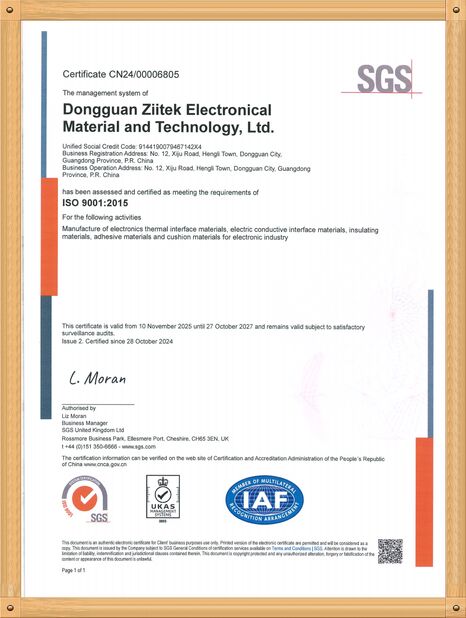
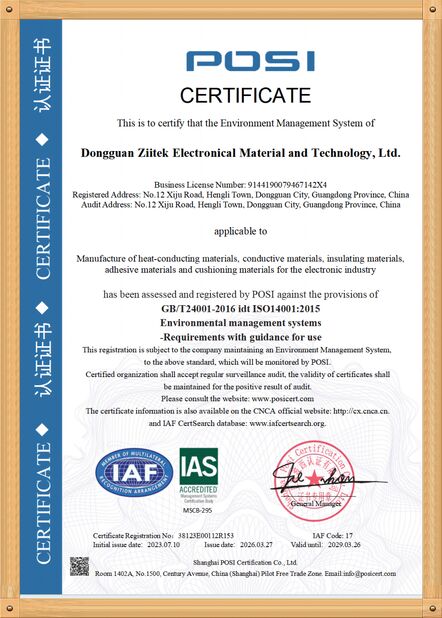
ZIITEK develops and manufactures Thermal Interface Materials (TIMs) for demanding electronic thermal management applications.
Our solutions include thermal pads, thermal gels, thermal pastes, and customized TIM solutions for AI servers, GPUs, CPUs, power electronics, telecommunications equipment, and high-performance computing systems.
ZIITEK thermal pad solutions are available in different thermal conductivity levels, thicknesses, hardnesses, and configurations to meet different interface requirements.
For AI server thermal management, our approach considers the complete interface rather than thermal conductivity alone:
Thermal Performance + Thickness + Compression + Electrical Insulation + Mechanical Compliance + Reliability
Need the Right TIM for Your AI Server?
Choosing the right TIM is an important part of AI server thermal management.
If you are developing an AI server, GPU, CPU, AI accelerator, or other high-power electronic system, ZIITEK can help evaluate your thermal interface requirements.
Please provide:
- Application and component type
- Interface gap
- Required TIM thickness
- Contact area
- Operating temperature
- Thermal conductivity target
- Thermal resistance target
- Electrical insulation requirements
- Estimated annual usage
Based on your requirements, ZIITEK can recommend a suitable thermal pad, thermal paste, thermal gel, or customized TIM solution.
ZIITEK — Thermal Interface Materials for AI Servers, GPUs and Next-Generation Computing.


 ¡Su mensaje debe tener entre 20 y 3.000 caracteres!
 Spanish